
How to Tension Your Chainsaw Chain Safely
How to Tension Your Chainsaw Chain Safely
A properly tensioned chainsaw chain isn’t just about performance—it’s a safety essential. Whether you’re a professional or a weekend gardener, making sure your chain is adjusted correctly helps prevent accidents, improves cutting efficiency, and extends the life of your equipment. This guide walks through why chain tension matters and how to get it right every time.
Why Chain Tension Matters
- Safety First: A loose chain can derail, increasing the risk of kickback or accidents. A too-tight chain puts undue stress on the bar, chain, and motor.
- Efficiency & Longevity: Correct tension ensures smoother cutting, reduced wear, and a longer lifespan for both the chain and the chainsaw.
Tools & Preparation
Before you begin, gather:
- A combination chainsaw wrench (or socket) and flat-head screwdriver
- Work gloves for protection
- A stable, well-lit workspace
Always ensure the chainsaw is switched off. For petrol models, disconnect the spark plug; for electric or battery models, unplug or remove the battery.
Safety First
- Turn off the chainsaw and engage the chain brake.
- Disconnect the power source (spark plug, plug, or battery).
- Wear cut-resistant gloves before handling the chain.
How to Test Chain Tension
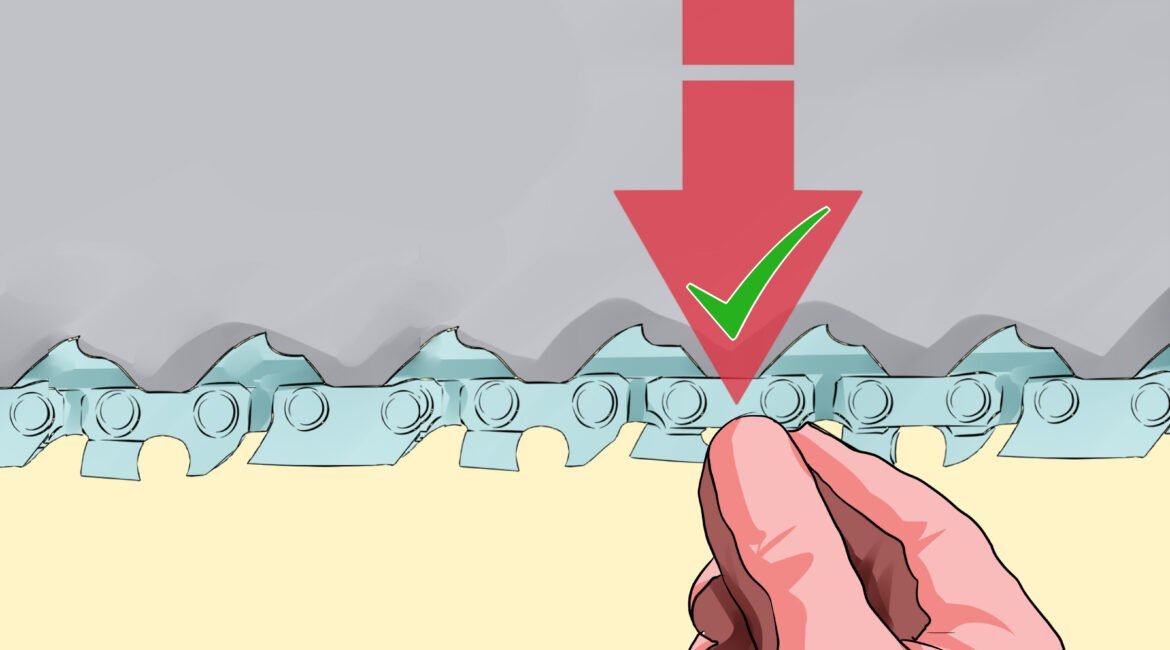
- Snap Test – Pull a mid-bar link away from the guide bar and release. The chain should snap back cleanly. If it sags or binds, adjustment is needed.
- Hand Rotation Test – The chain should rotate freely by hand—not too stiff, not too loose.
Adjusting the Tension
- Loosen the bar nuts slightly to allow the guide bar to move.
- Lift the bar nose to keep tension consistent during cutting.
- Locate the tension screw (usually near the base of the bar).
- Turn clockwise to tighten, counterclockwise to loosen.
- Retighten the bar nuts while keeping upward pressure on the bar.
- Recheck with the snap test and rotation test.
Extra Tips for Safe Use & Maintenance
- Break-in Period: New chains stretch—check tension every 10–15 minutes during the first hour of use.
- Hot vs. Cold: Chains expand when hot. Always check and adjust when the saw is cool.
- Worn Chain Signs: If frequent re-tightening is needed, inspect the chain and bar for wear or damage.
- Routine Checks: Regularly inspect the chain, bar, and drive links for cracks, wear, or loose rivets.
Conclusion
Keeping your chainsaw chain properly tensioned makes cutting smoother, reduces wear on your machine, and—most importantly—keeps you safe. Taking a few minutes to check and adjust before every use is a small step that makes a big difference in performance and safety.
